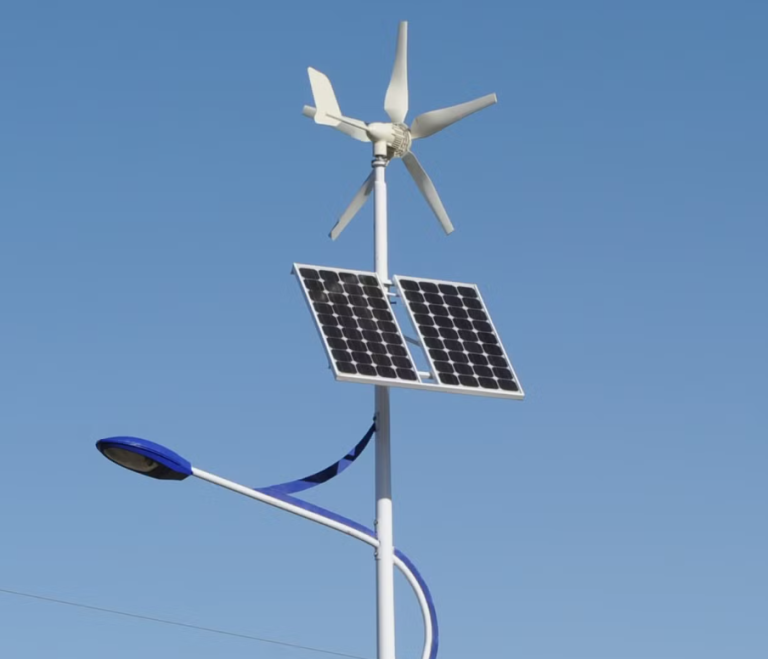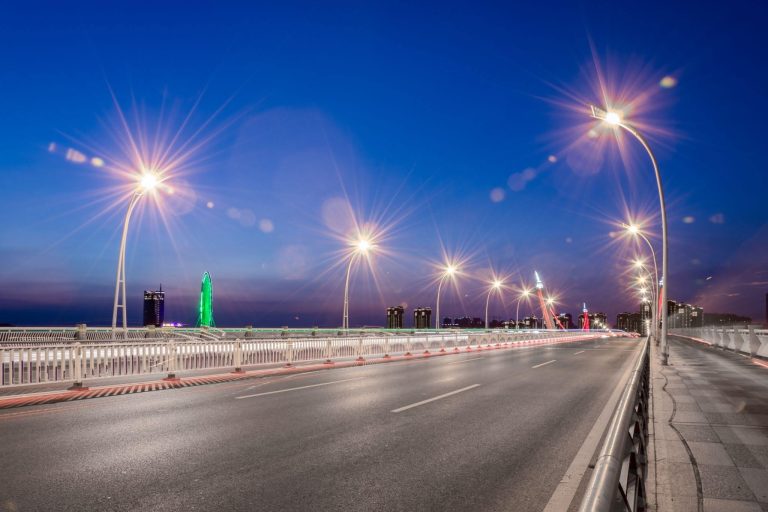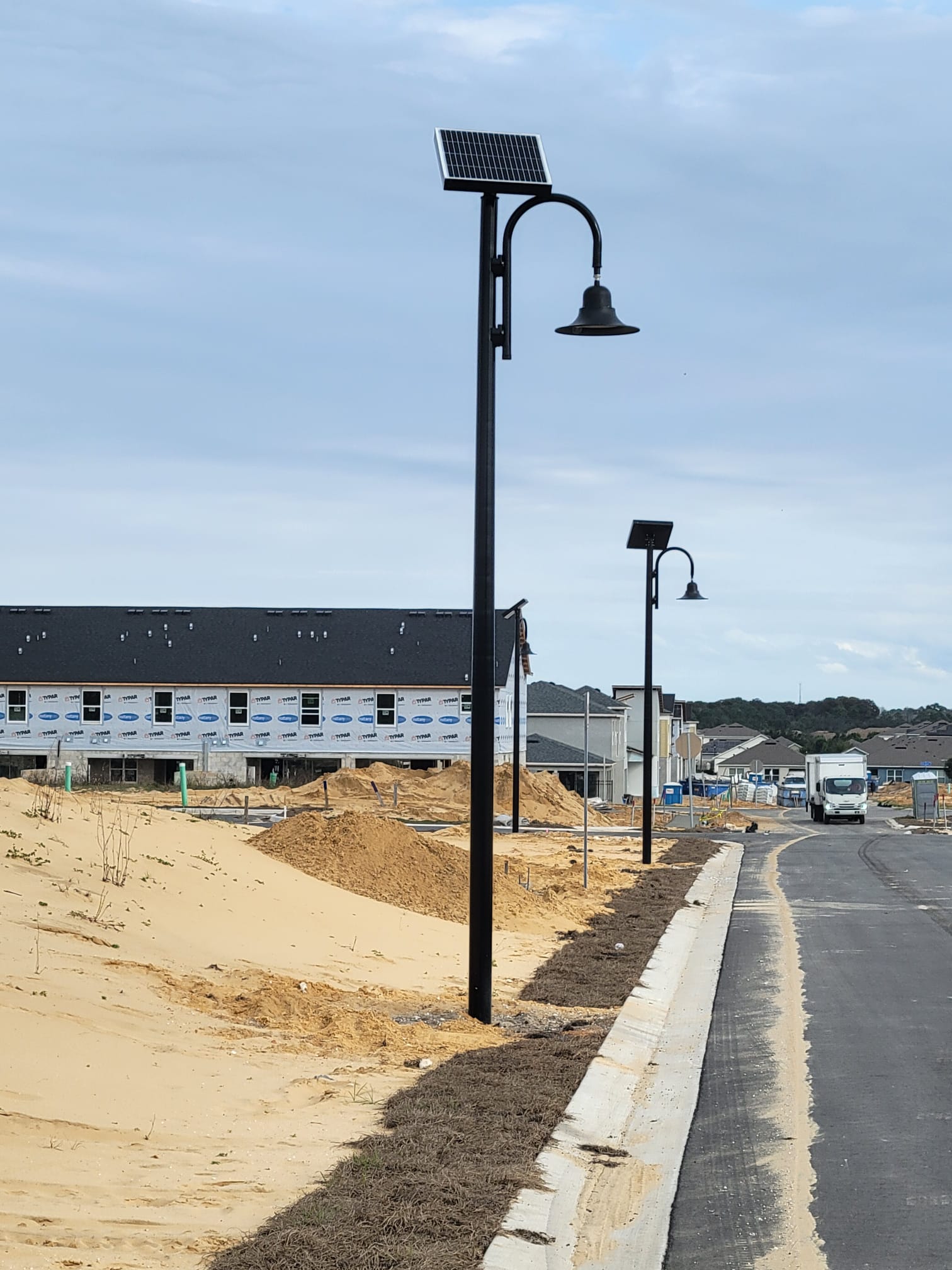
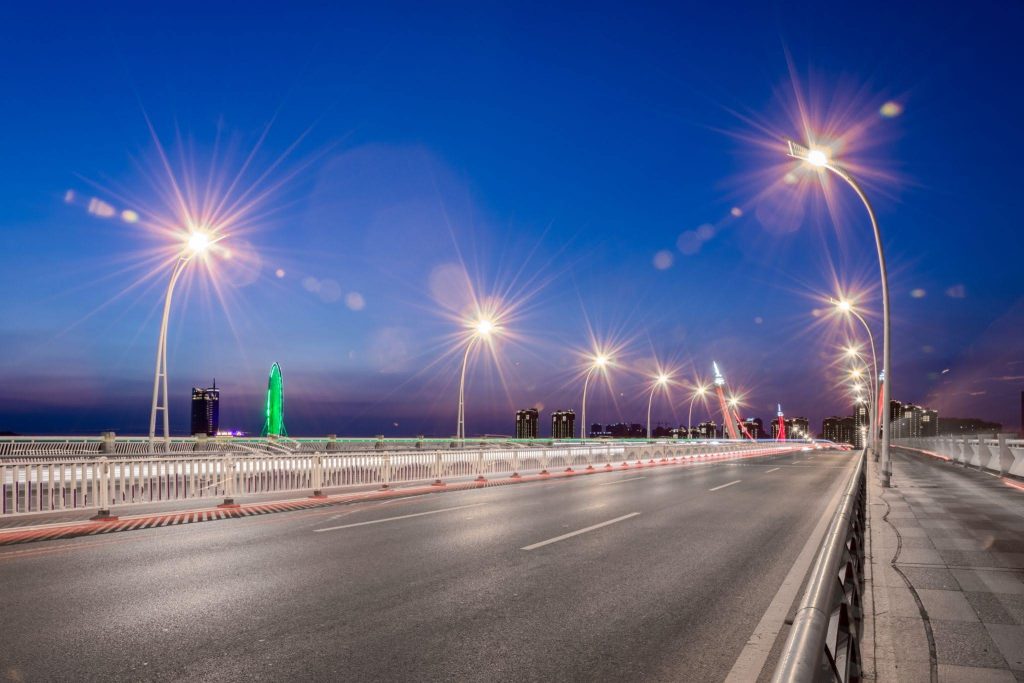
A solar street light cost usually falls between $100 and $2,000 or more per fixture, based on published manufacturer pricing guides. Basic all-in-one units for driveways and garden paths sit at the low end. Commercial fixtures with higher lumen output, bigger LiFePO4 batteries, and tall poles land at the top, and that’s before installation.
The range is wide because you’re not buying one thing. You’re buying a solar panel, a battery, an LED head, a charge controller, a pole, and the labor to stand it all up. Each piece comes in a cheap version and an expensive one.
The sticker price also hides the bigger story. A grid-tied light can look cheaper on a quote, then cost far more once you add trenching, wiring, permits, and years of electric bills.
This guide breaks down what each part costs, what pushes the price up or down, and how to build a realistic budget for a road, parking lot, or park project. You’ll also see where cutting costs makes sense and where it backfires.
Solar Street Light Cost by Type & Grade
Expect to pay roughly $100 to $500 for a basic all-in-one solar street light, $300 to $1,000 for an entry-level split-type system, and $500 to $1,500 for commercial fixtures above 5,000 lumens. Premium, high-output systems can pass $2,000 per unit before poles and labor.
Here’s how the tiers line up in the pricing guides we reviewed:
| Category | Typical light output | Common uses | Reported price per fixture |
|---|---|---|---|
| Basic residential | 1,000 to 2,000 lumens | Driveways, garden paths | $100 to $300 |
| All-in-one (integrated) | Varies by wattage | Paths, parks, small lots | $100 to $500 |
| Split-type (all-in-two) | Varies by wattage | Larger sites, custom layouts | $300 to $1,000 |
| Commercial grade | 5,000+ lumens | Parking lots, public spaces | $500 to $1,500 |
| High-end, feature-rich | High output, smart controls | Roads, campuses, large projects | $2,000+ |
Most of these figures describe catalog fixtures sold by the unit. Engineered systems for roadways and DOT corridors are usually quoted per project, with photometric design and autonomy sizing built in. Treat the table as a starting point, not a final number.
Weather protection also moves the price. Fixtures rated IP65 or higher for heavy rain, snow, and heat can add $100 to $300 compared with standard models.
What Drives the Price of a Solar Street Light?
Most of the gap between a budget fixture and a commercial one comes down to three components.
LED Wattage & Lumen Output
Brighter lights cost more because they need a larger LED array, and that array needs a bigger panel and battery to run all night. One pricing guide puts a 20-watt solar street light near $150, while a 50-watt unit can pass $400.
Lumens matter more than watts. Watts tell you how much power the LED draws. Lumens tell you how much light actually comes out, and a well-designed fixture at lower wattage can outperform a cheap one rated higher.
For context, entry models around 1,000 to 2,000 lumens suit residential paths. Public spaces typically need 5,000 lumens or more. Our cobra-head and all-in-two street lights reach up to 50,000 lumens for wide roads and DOT corridors.
A common mistake is buying on wattage alone. Ask for the lumen rating and a photometric layout so you know the light covers the surface you need lit. Color temperature (CCT) is worth checking too, since warmer 3000K light is often required near homes and dark-sky areas.
Battery Chemistry & Autonomy Days
The battery is often the biggest swing in price. Higher-capacity batteries that keep a light running through long nights can add $100 to $500 per fixture, depending on runtime. Chemistry matters as well, since lithium iron phosphate (LiFePO4) costs more upfront than lead-acid but lasts far longer.
Autonomy is the number of nights a light can run without fresh sun. A cheap unit may cover a single night. Commercial systems are sized for several days, so one stormy week doesn’t leave a street dark.
SolarPath Sun Solutions builds its street lights around LiFePO4 batteries rated for 3,850+ deep-cycle charges. Autonomy is configurable from three to seven days, and the operating range runs from -40°F to 158°F. That spec costs more on day one and avoids early battery swaps later.
Lead-acid batteries are the usual cost-cutting move in budget lights. They’re cheaper to buy and tend to need replacing much sooner, so the savings rarely last. Our comparison of solar light battery types covers how LiFePO4 stacks up against lithium-ion and lead-acid.
Solar Panel Size & the Charge Controller
Larger, more efficient solar panels charge the battery faster and keep the light reliable in low sun, and they cost more. Budget lights often use 20 to 30-watt panels, while high-performance fixtures with 50 to 100-watt panels can add $300 to $700 to the price.
Panel size should match the site, not a catalog default. A location with fewer peak sun hours (PSH) needs more panel area to refill the same battery. When we size solar street lights for sites anywhere from Alaska to Puerto Rico, the panel and battery are matched to that site’s sun data first.
The charge controller is a small part with a big effect. An MPPT controller pulls up to 30 percent more energy from the panel than a basic PWM controller in cloudy weather or at dawn and dusk.
Cheaper lights sometimes use PWM controllers to shave costs. Ask which one you’re getting. Monocrystalline panels are the standard for commercial fixtures because they produce more power per square foot.
All-in-One vs Split-Type Solar Street Light Prices
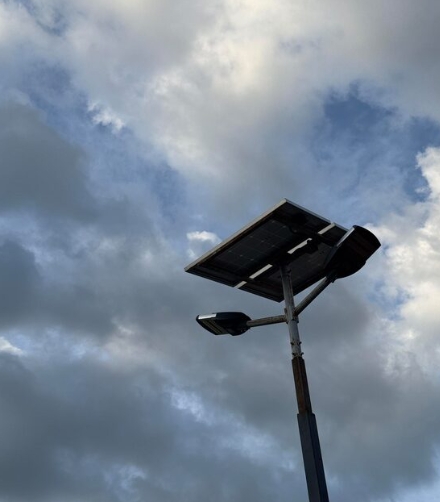
All-in-one solar street lights cost less upfront, roughly $100 to $500 per unit in published guides, because the panel, battery, controller, and LED share one housing. Split-type, or all-in-two, systems run about $300 to $1,000 at the entry level because each part is separate and adjustable.
The cheaper option isn’t always cheaper on your site. All-in-one fixtures install fast and cut field wiring, which keeps labor low. They suit paths, parks, and smaller parking areas.
All-in-two fixtures separate the panel from the light head. That lets the panel tilt toward the sun on its own, supports higher lumen output, and works on taller poles up to 40 feet. Roads and wide lots usually need that extra reach.
Picking the wrong type gets expensive. Put all-in-one fixtures on a wide arterial road, and you may need more poles to hit the light target, which wipes out the savings. For a side-by-side breakdown, see our guide to all-in-one vs all-in-two solar lights.
Poles, Installation, and Costs Beyond the Fixture
The fixture is only part of the invoice, so plan for these items too.
Poles, Foundations, & Mounting Hardware
Poles add a real chunk to the total. One pricing guide lists a 10-foot pole at about $100 to $200, while a 20-foot pole in premium material can add $500 or more. Roadway poles at 25 to 40 feet, plus their concrete foundations, cost more again.
Material is the main lever. Aluminum and galvanized steel resist rust and wind load better than basic iron, and they’re priced accordingly. Coastal sites and areas with heavy snow usually justify the upgrade.
Pole height ties back to light output. Parking lots often use 20- to 30-foot mounting heights to reach 1 to 3 footcandles of average light. Roads need taller poles and careful spacing to meet IES RP-8 roadway standards.
A common mistake is reusing an old pole without checking it. A solar panel adds weight and catches wind, so the pole and base need to handle that load. Our guide on sizing a solar street light system for your parking lot walks through height and spacing.
Installation Labor and Site Work
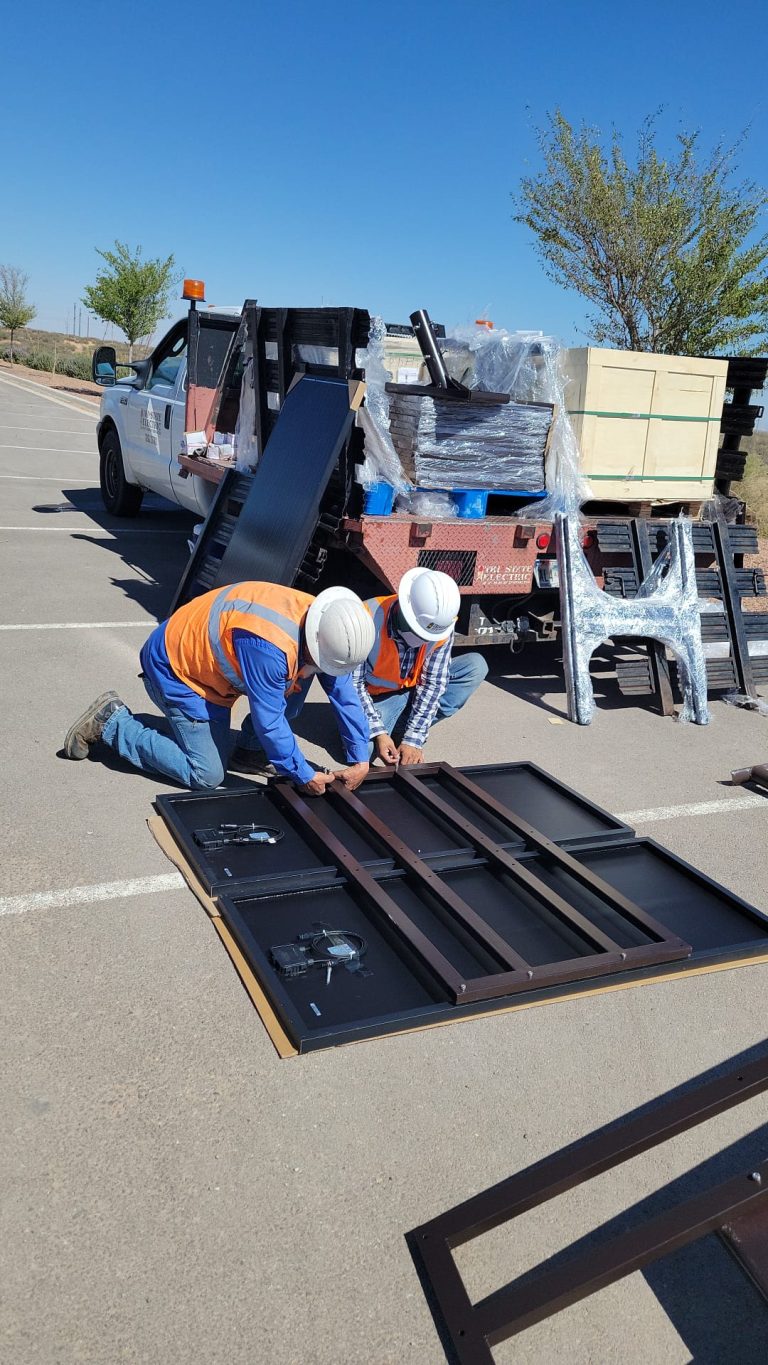
Installing a solar street light usually costs less than installing a grid-tied one, because there’s no trenching, conduit, or utility hookup. One manufacturer reports that a single solar pole can be installed in under an hour. Foundations, equipment rental, and local labor rates make up most of the rest.
Compare that with grid-tied lighting. Running power to a new pole means cutting asphalt, laying conduit, pulling wire, pulling electrical permits, and waiting on the utility. On long or remote runs, that work can cost more than the fixtures.
Solar also skips utility coordination, so projects can wrap up in days rather than months. That matters when a grant deadline or construction schedule is tight.
Other line items to plan for:
- Freight and delivery to the site
- Permits, where your city or county requires them
- A photometric study, if your supplier charges for one
- Lift or crane rental for taller poles
Solar vs Grid-Tied Street Lights: Total Cost Over Time
Solar street lights usually cost more upfront and less over their life. One manufacturer estimates the initial investment at about twice that of a traditional street light. Over eight years, it puts operating costs near $5,000 for solar versus roughly $10,000 for grid-tied lighting once electricity and maintenance are counted.
| Cost factor | Grid-tied street light | Solar street light |
|---|---|---|
| Upfront hardware | Lower | About twice as much (one manufacturer’s estimate) |
| Trenching, conduit, wiring | Required | Not required |
| Monthly electricity | Ongoing utility bill | None |
| Lamp lifespan | High-pressure sodium bulbs around 5 years | LEDs 10+ years |
| 8-year operating cost (example) | About $10,000 | About $5,000 |
| During a grid outage | Goes dark | Keeps running on stored power |
The gap widens on sites with no power nearby. Every foot of trenching you skip stays in the budget.
Copper theft is another hidden cost. With no underground wire, there’s nothing to steal. Our article on solar lighting ROI and payback period runs these numbers in more detail.
How to Budget a Solar Street Light Project
Build your budget from the site up, not from a catalog price. Start with the area you need to light and the light level it requires, then let a photometric study set the fixture count, pole height, and battery size. Multiply that by the per-fixture price and add poles, foundations, and labor.
Here’s the order that works:
- Measure the area and note any existing poles or power.
- Set a light target, such as 1 to 3 footcandles for a parking lot.
- Get a photometric study to confirm fixture count and spacing.
- Size the battery for your site’s peak sun hours and the autonomy days you want.
- Price fixtures, poles, foundations, delivery, and installation as separate lines.
- Add a small contingency for permits or site surprises.
Your final solar street light cost comes from steps three and four more than anything else. Skip the study, and you risk buying too many fixtures, or too few.
SolarPath Sun Solutions supplies solar street lights across all 50 states, and every project includes a stamped photometric study at no additional cost. That turns a rough guess into a quote you can take to a board.
Ways to Lower the Cost Without Cutting Corners
You can bring the total down by right-sizing the system, choosing the simplest fixture type that meets your light target, and using grant programs. The goal is fewer, better-placed fixtures, not cheaper parts that fail early and cost more to replace.
A few moves that work:
- Use dimming schedules so lights run brighter early in the evening and lower after midnight, which allows a smaller battery.
- Choose all-in-one fixtures for paths and parks that don’t need tall poles.
- Reuse existing poles, but only after checking they can carry the added load.
- Phase large projects so spending lines up with each budget cycle.
- Pick UL-listed fixtures, since UL listing can help with utility rebate eligibility.
- Look into grants such as Safe Streets and Roads for All (SS4A) for public lighting.
Don’t cut the battery or the charge controller to save money. Those are the parts that decide whether the light still works in year five.
Federally funded projects may also need to meet Build America, Buy America (BABA) rules, so check that before you buy. Our solar lighting grants and funding page lists programs public agencies use.
Frequently Asked Questions
How long do solar street lights last?
A well-built commercial solar street light can last 10 years or more. LED arrays are often rated for 80,000 hours or longer, and LiFePO4 batteries hold most of their capacity for thousands of charge cycles. Budget units with lead-acid batteries usually need replacement much sooner, which raises the lifetime cost.
Are solar street lights cheaper than electric street lights?
Upfront, usually not. Solar fixtures cost more per unit. Over time, they often come out ahead because there’s no trenching, no wiring, and no electric bill. One manufacturer estimates eight-year operating costs at about half those of a grid-tied system, and the savings grow on remote sites far from power.
How much does it cost to install a solar street light?
Installation depends on pole height, foundation type, equipment, and local labor rates, so quotes vary widely. Solar installs are usually simpler than grid-tied ones because they skip trenching, conduit, and utility hookups. One manufacturer reports a single pole can go up in under an hour.
Do solar street lights work in winter or on cloudy days?
Yes, if the system is sized for it. Commercial lights store several nights of power, often three to seven days of autonomy, so short cloudy spells don’t leave a street dark. LiFePO4 batteries also handle cold well, with some rated to operate down to -40°F.
Can grants pay for solar street lights?
Sometimes. Public agencies often include solar lighting in projects funded through programs such as Safe Streets and Roads for All (SS4A) and other transportation or pedestrian safety grants. Eligibility depends on each program’s rules and the agency’s application, and federally funded work may need to meet BABA requirements.
How many solar street lights do I need for a parking lot?
It depends on lot size, pole height, and your light target. Many parking lots aim for 1 to 3 footcandles of average light, with fixtures mounted 20 to 30 feet high. A photometric study is the only reliable way to set the exact count and spacing before you buy.
Get an Accurate Quote for Your Solar Street Lights
Your solar street light cost depends on your site, but now you know which parts move the number. Light output, battery, panel, pole height, and installation set the price. Skipping trenching and power bills changes the long-term math in solar’s favor. Get those pieces right, and the fixtures keep paying you back for years.
SolarPath Sun Solutions designs and manufactures solar street lights for roads, parking lots, and parks in all 50 states and Puerto Rico. Tell us about your project, and we’ll send back a photometric layout and a quote built around your site. Call us at 201-490-4499 or email [email protected], and our team will respond within one business day.
Explore solar street lights to compare fixtures, or request a quote to get started.
Prices are estimates and may vary. Contact us for a current quote.