Roadway and street lighting projects require consistent illumination meeting IES RP-8 standards, state DOT specifications, and the photometric distribution types that match road classification, pole height, and traffic speed. Grid-tied roadway lighting requires extensive trenching along road shoulders, utility coordination across multiple jurisdictions, electrical permits, and decades of ongoing maintenance and energy cost. Rural and low-volume corridors often make grid-tied lighting economically impossible.
SolarPath road and street solar lighting delivers up to 50,000 lumens per fixture with all five photometric distribution types, pole heights of 25 to 40 feet and higher, and IP66 ingress protection. Each fixture runs on a lithium iron phosphate (LiFePO4) battery, MPPT charge controller, and high-efficiency photovoltaic (PV) panel. UL and Dark Sky listings meet state DOT procurement requirements including Caltrans, TxDOT, FDOT, NCDOT, and other state highway specifications.
Browse our cobra head street lights, all-in-two fixtures, and solar street light family.
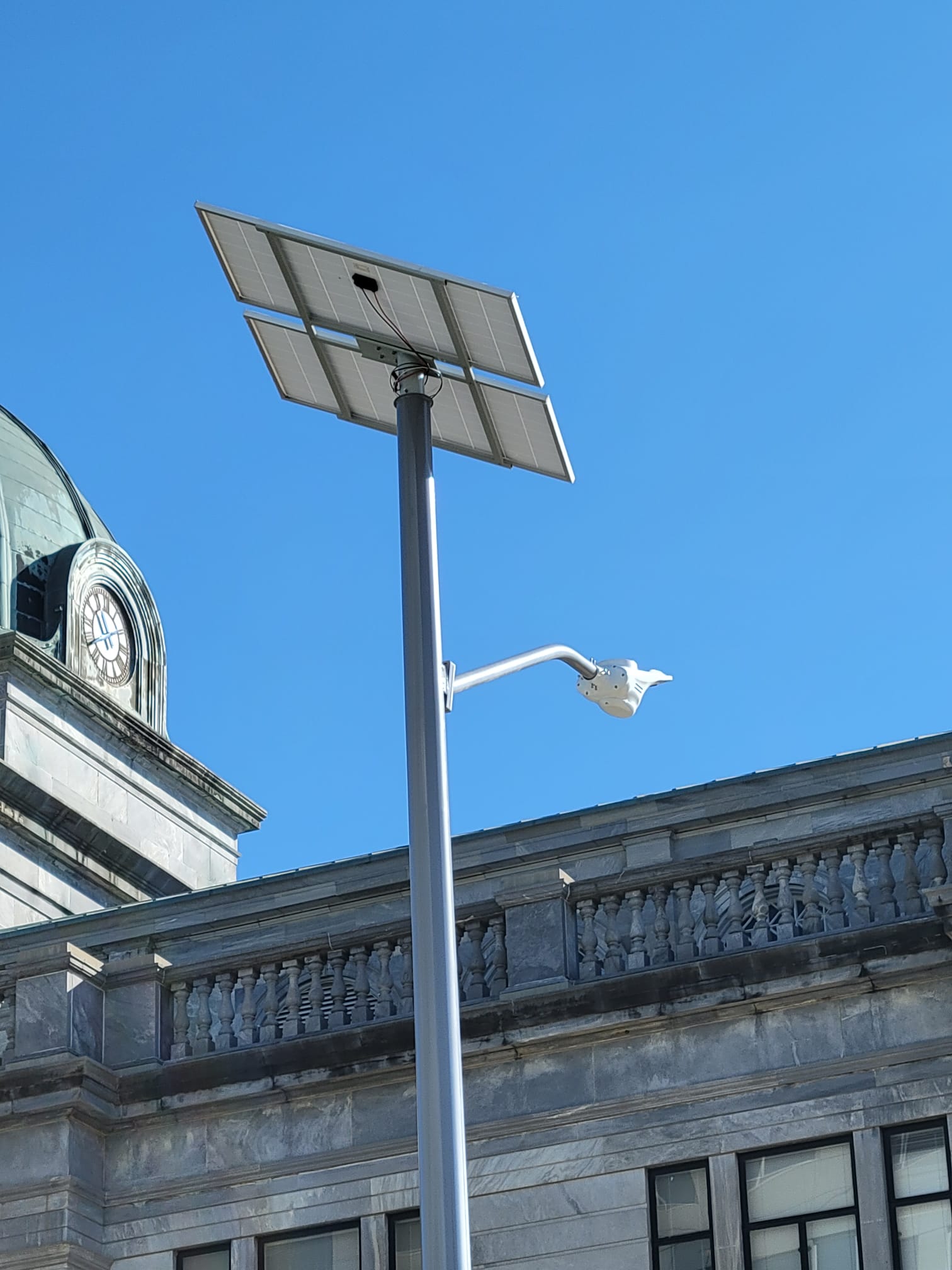
Cobra head solar street lights are the industry-standard roadway fixture. Their Type II and Type III photometric distribution meets IES RP-8 requirements for arterial and collector roads. Pole heights of 30 to 40 feet and 6,000 to 50,000 lumen output cover high-speed corridors and interchange ramps.
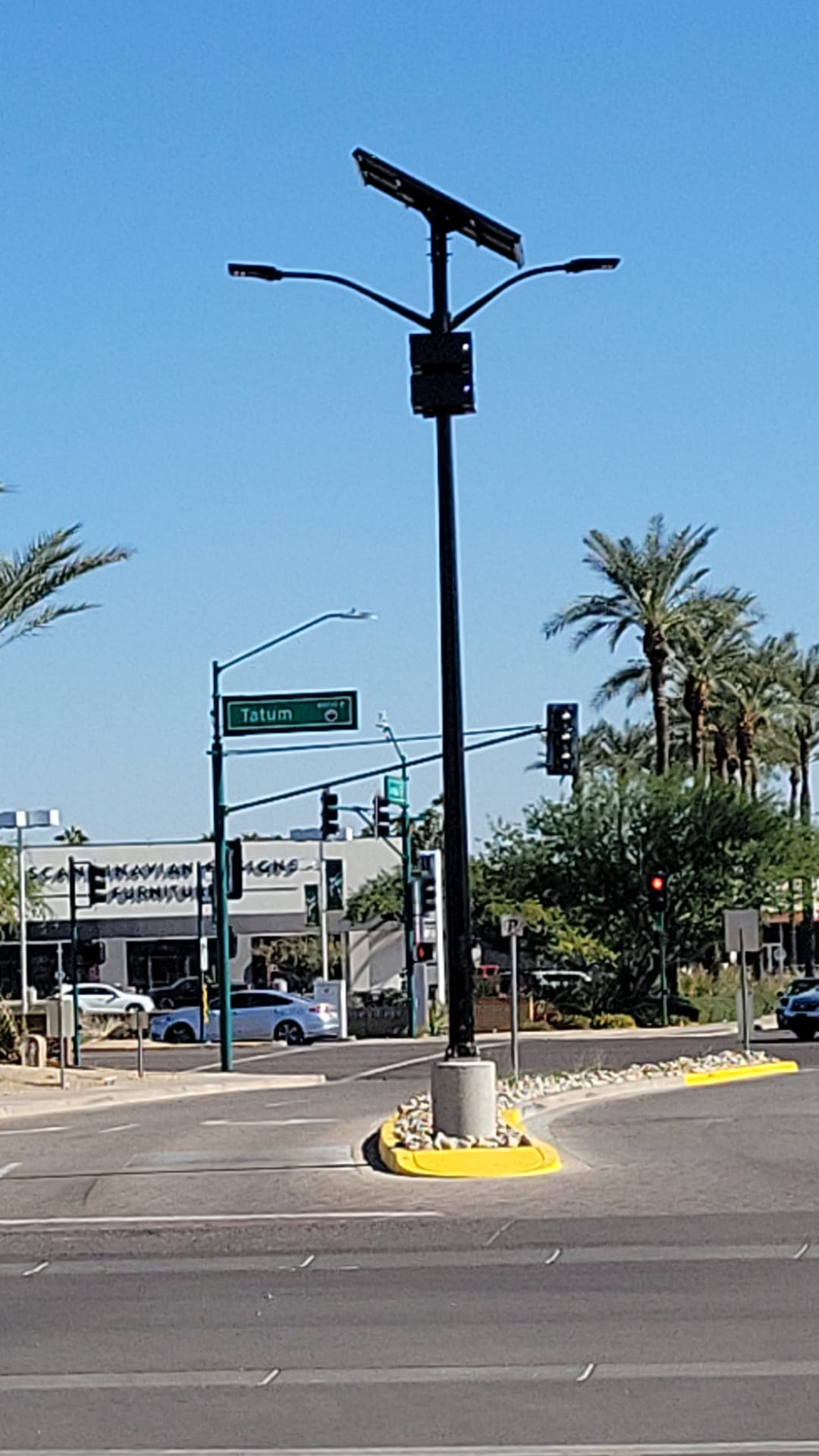
All-in-two solar street lights with split-panel adjustable tilt suit tall pole installations and shaded corridor sites. Solar traffic lights provide MUTCD compliant signal and warning illumination at intersections, school zones, and work zone detours.
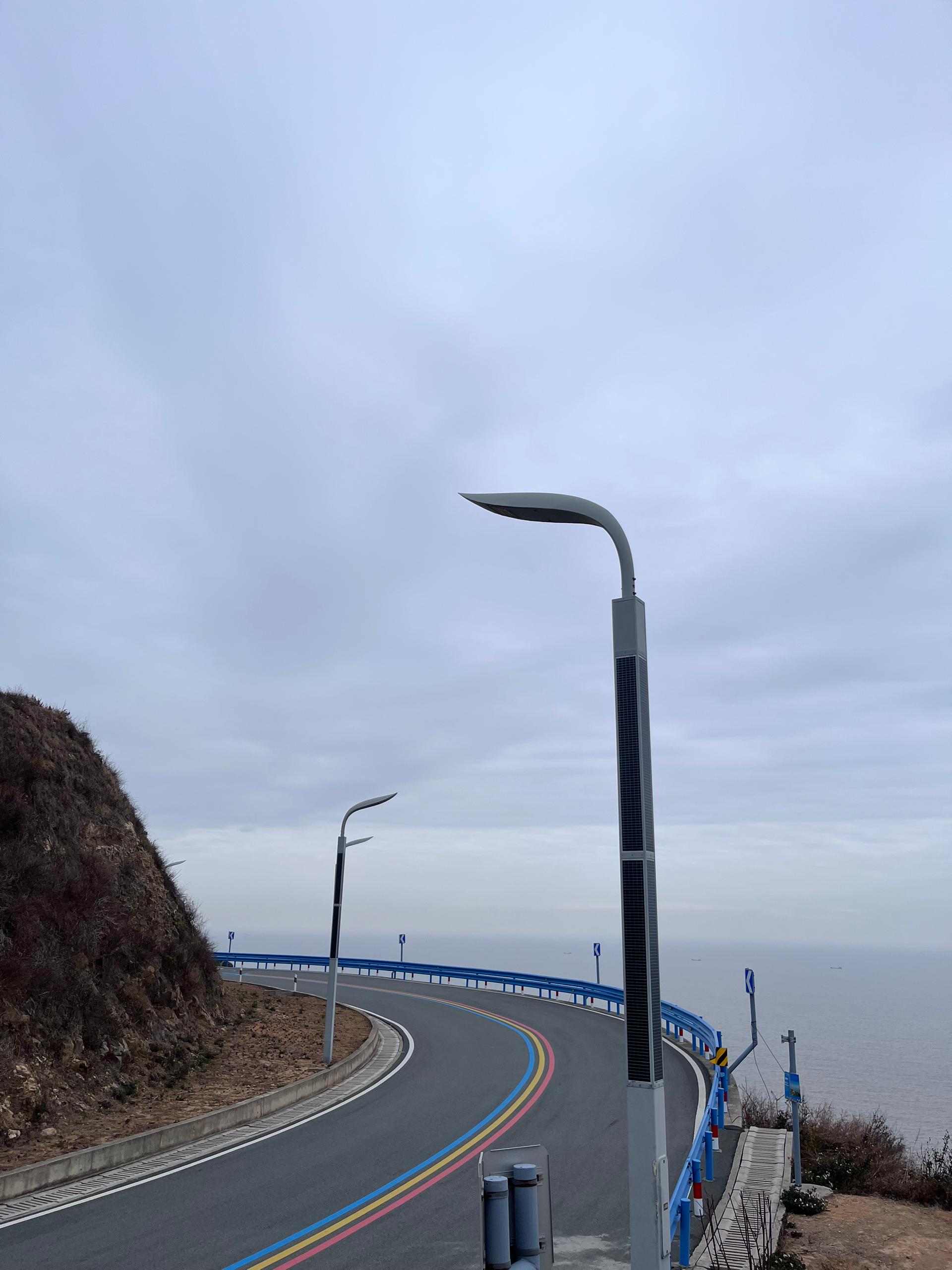
Solar wrap poles wrap the PV panel around the pole with the battery housed inside for a clean, low-EPA profile. Explore our full product catalog to match fixtures to the functional road classification and DOT specification.
A county public works department needed to light 4.2 miles of rural highway corridor where grid service ended 2.8 miles from the project start. The cost of extending utility service to the remaining corridor would have exceeded $380,000 in trenching and transformer work before any fixtures were installed.
SolarPath all-in-two cobra head fixtures at 35-foot pole heights delivered 10,000 lumens per fixture with Type III distribution and IES RP-8 compliant uniformity across the corridor. Installation completed in 14 crew days with no trenching, no utility service extension, and no ongoing electrical service costs. The project came in at 38 percent of the total installed cost of the grid-tied alternative, and the product-specific warranty covers every fixture component.
Every SolarPath roadway project is engineered to the state DOT specification and IES RP-8 functional road classification. Our team delivers stamped photometric studies, wind-load calculations, and pole design documentation for every corridor.
Every project ships with a stamped photometric study confirming lux targets, uniformity ratios, and fixture placement before procurement.
3000K and 4000K CCT with full-cutoff optics meet International Dark-Sky Association ordinances and county regulations.
Standard coverage on the photovoltaic panel, LiFePO4 battery, MPPT charge controller, and LED array across every SolarPath fixture.
Specification | Value |
Photometric Distribution | All five types, Type I to Type V (IES RP-8) |
Pole Height | 25 to 40 ft and higher |
Pole Spacing | 120 to 200 ft |
Lumen Output | Up to 50,000 lm |
Recommended Fixture | Cobra Head or All-In-Two Street Light |
CCT | 3000K / 4000K / 5700K selectable |
DOT Compliance | Caltrans, TxDOT, FDOT, NCDOT pre-qualified |
Autonomy Days | Up to 7 nights |
Wind Load Rating | Up to 150 mph (180 mph optional) |
Warranty | Product-specific |
Off-grid roadway lighting solves the economic impossibility of lighting rural and low-volume corridors. Eliminating trenching means pipeline and underground utility records are irrelevant. Eliminating utility service drops means project timelines shrink from months to weeks. Zero energy cost means DOT operating budgets absorb no kWh billing exposure. UL and Dark Sky listings open Caltrans, TxDOT, FDOT, NCDOT, and other state DOT procurement workflows.
Yes. Our fixture platforms meet Caltrans, TxDOT, FDOT, NCDOT, ADOT, and other state DOT specifications for highway and arterial lighting. Stamped photometric studies and pole loading calculations are provided with every project.
30 to 35 feet for collector roads with Type II distribution. 35 to 40 feet for arterial corridors with Type III distribution. 40 to 45 feet for principal arterials and interchange ramps.
Type II suits narrow streets and collector roads up to 30 feet wide. Type III suits standard two-lane and four-lane arterials. Type IV delivers forward-throw for parking lot perimeters. The IES RP-8 standard specifies which type applies to each functional road class.
Yes. Rural highway corridors are one of the strongest use cases for solar lighting because grid extension costs frequently exceed the total project budget. SolarPath all-in-two fixtures at 35-foot pole heights with 4-day autonomy cover corridor projects nationwide.
Solar corridor projects complete in 30 to 50 percent of the grid-tied timeline. No trenching along road shoulders, no utility coordination across jurisdictions, no transformer installation, no ongoing underground inspections.
Four nights standard across Sun Belt and temperate zones. Five to seven nights for northern and Pacific Northwest corridors. LiFePO4 battery capacity is sized against site peak sun hours and climate data.
Yes. Every SolarPath roadway fixture ships UL and Dark Sky listed, meeting state DOT procurement, federal Buy America requirements, and utility rebate program eligibility.
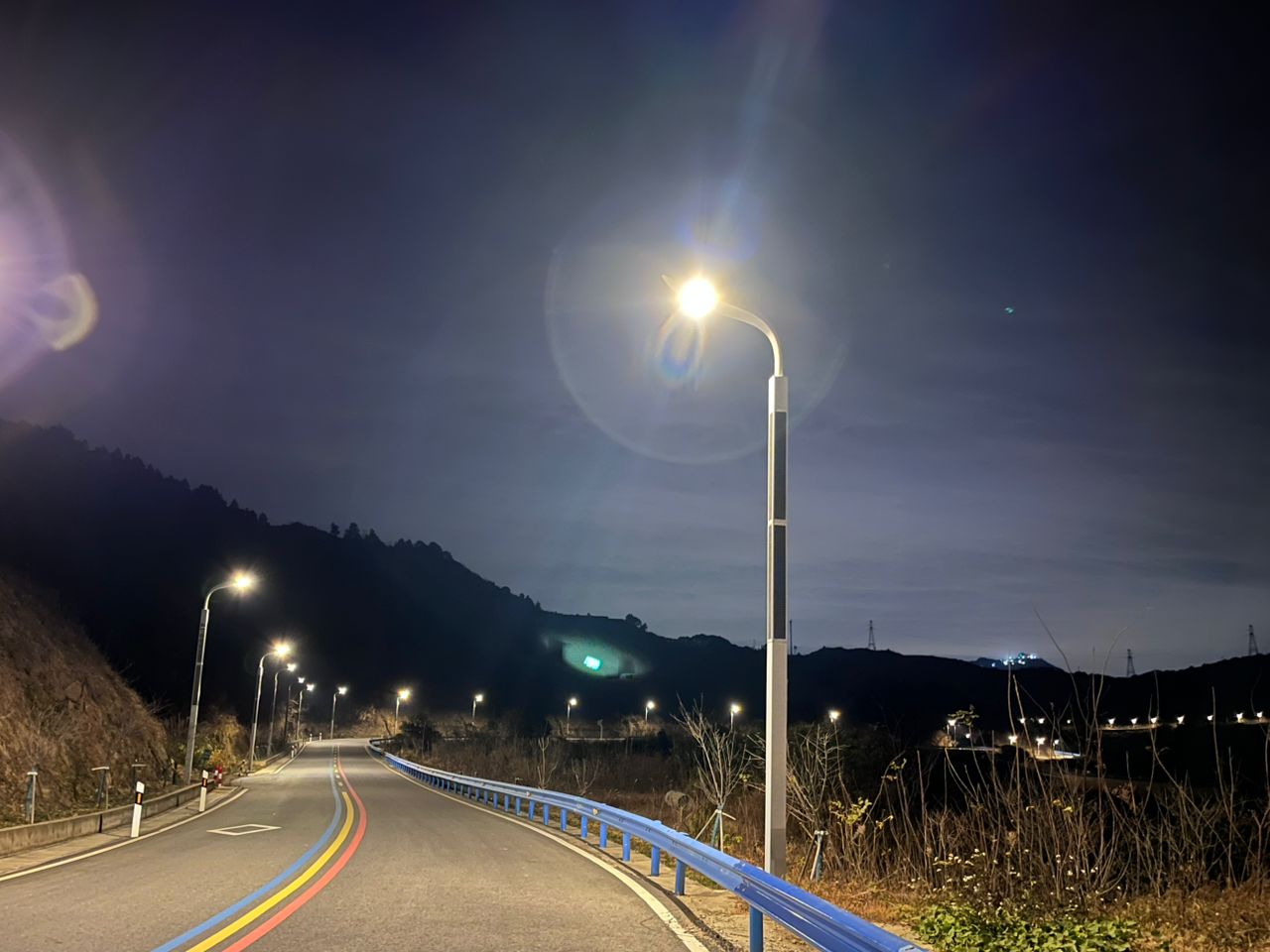
Solar street lights lining municipal roads, intersections, and scenic routes — fully off-grid.